Toxic Waste in the Baltic Sea
Chemical Weapons in the Baltic Sea
By: Major John-Olov Fridh
Green Cross Baltic Sea Office, Sweden
Hidden dangers in the depths of the oceans
The task of the Baltic Sea Office is to inform about environmental bombs in the seas around Sweden
Off the West coast of Sweden, the south coast of Norway and in the Baltic Sea, there are lots of old wrecks that contain large amounts of oil, combat gas and other chemicals.
Most were sunk by the United States and the Soviet Union after World War II. But as recently as the 1990s, Russia is said to have dumped, among other things, radioactive waste in the Swedish part of the Baltic Sea. There are around 50,000 tonnes of dumped chemical substances in the Baltic Sea and 200,000 tonnes of regular ammunition plus 45,000 tonnes in the Skagerack.
On this site you will initially find useful links to various websites where you can delve into the issue. Will also post a few different leaflets and documents that may be interesting. A lot of work is going on to find out exactly where the dumps are, the status of the dumped containers, the toxicity, the impact on the environment, the danger of contact with substances from the dumps. The dumping areas are being investigated and planned.
The map below shows the areas where weapons would have been dumped, but in the corridors on the way forward there is also a risk of finding dumped barrels and weapons more or less rusted.
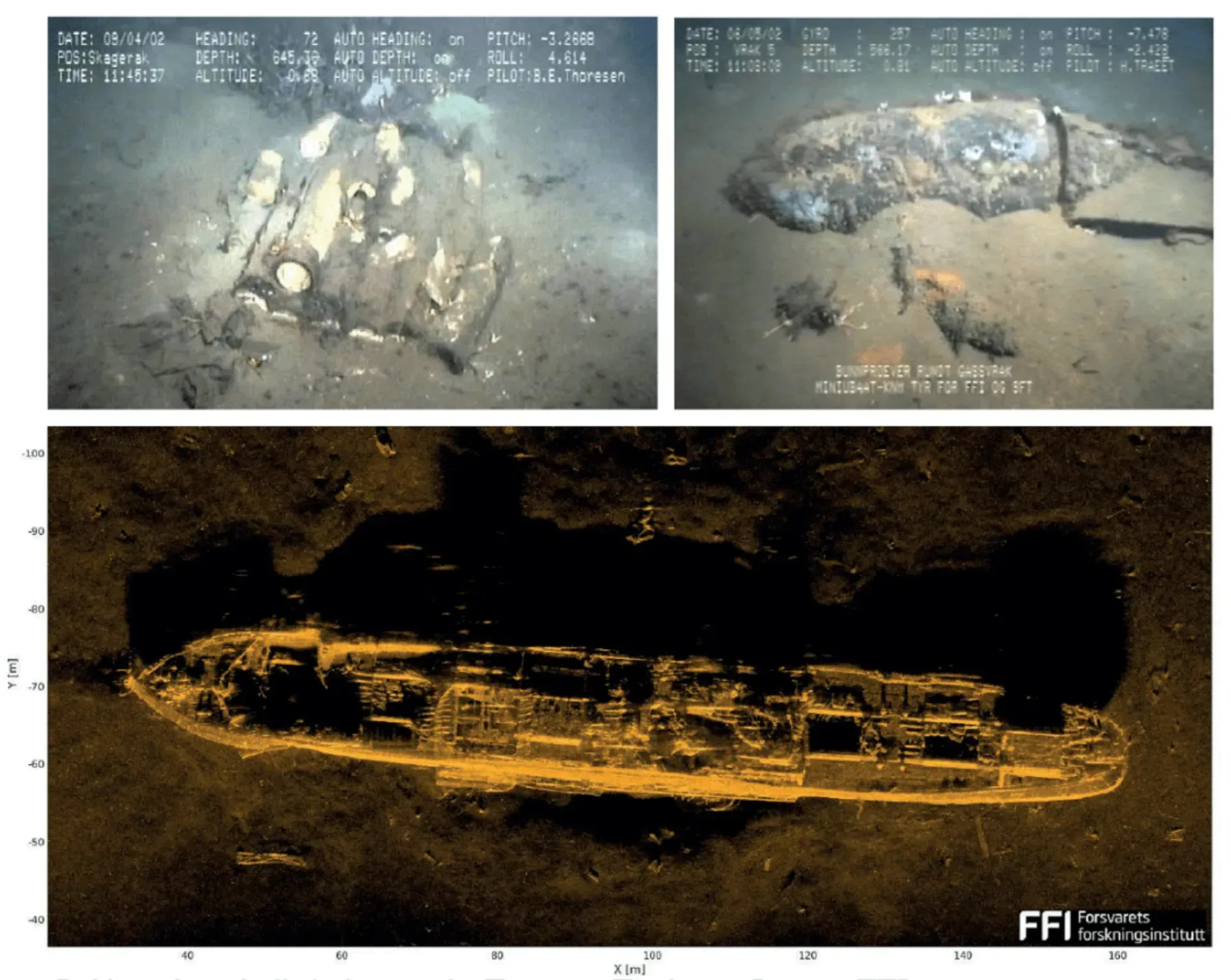
After the Second World War, large quantities of ammunition were dumped in both the Baltic Sea and the Skagerrak. Some of this ammunition contains various types of chemical weapons, of which special mustard gas has ended up in fishermen's gear on several occasions.
Five risk areas A - E are marked in the map. In areas A and B, loose ammunition was dumped, while in areas C - E whole ships were sunk and barges loaded with ammunition. The actual dumping zones have been marked in red on the map.
The ammunition was transported by boat to areas A and B and the dumping probably started along the yellow marked transport routes from the loading port of Wolgast in Germany before arriving at the actual dumping zones.
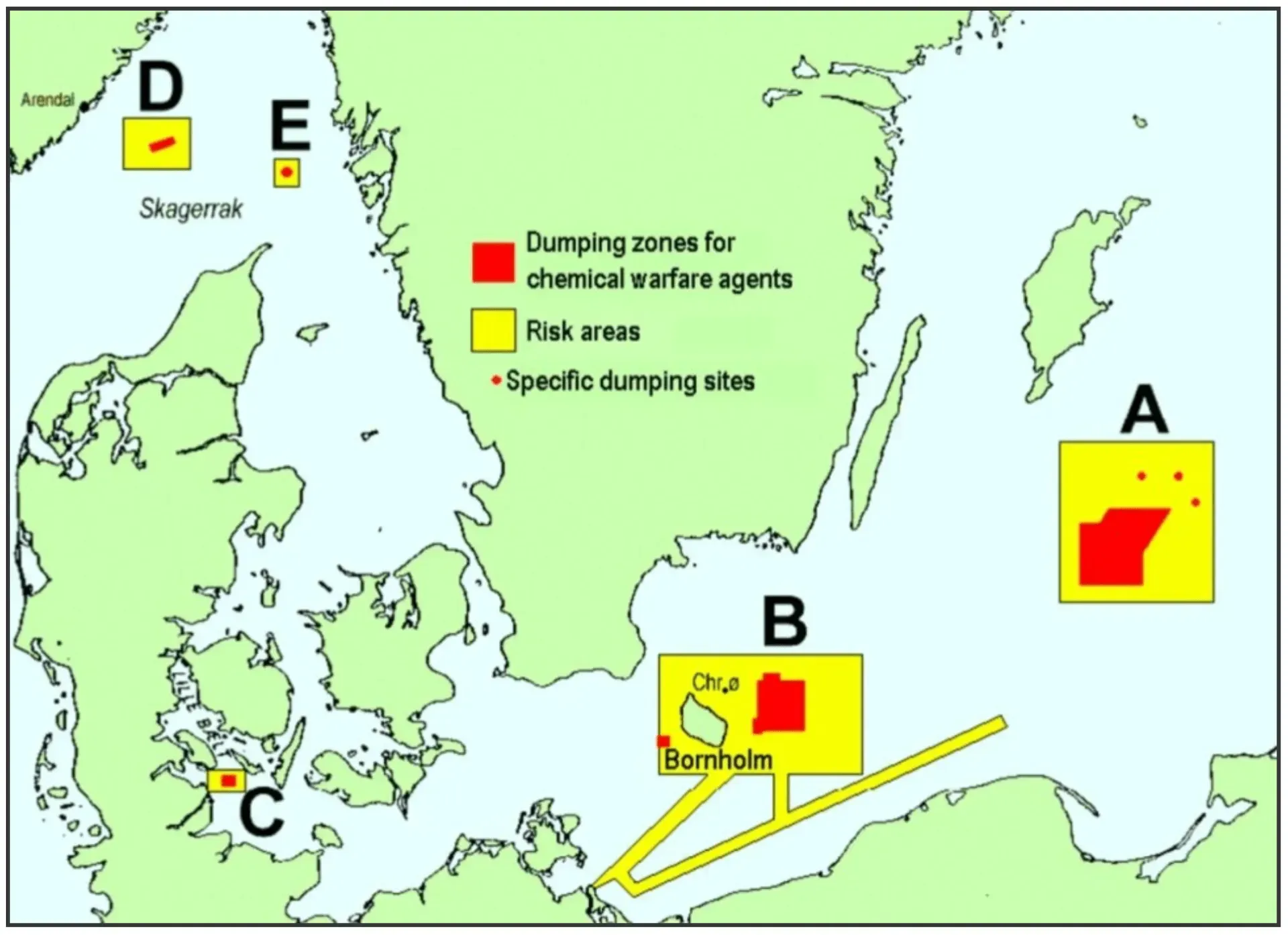
Map of dumping zones for chemical weapons and risk areas
Published with permission of the Norwegian Defense Research Institute (FFI).
The table shows an overview of what is known about the five areas.
Green Cross Sweden works to inform the public on the presence of munitions and toxic waste in the Baltic Sea. Green Cross provides instructions on what to do in case of coming in contact with munitions, and how to contact the authorities if you have any questions about chemical warfare agents.
To learn more about the dumpsites and related risks visit the https://green-cross.se/balticsea
For more information contact the Baltic Sea Office:
Major John-Olov Fridh, BalticSeaOffice@green-cross.se